The United States is a country that takes extensive pride in its successful industries. This focus and determination are reasons for the immense economic growth they experienced to attain this esteem as a modern superpower. However, the same industries are responsible for creating a false reality of American values and culture. Despite institutions such as the judicial system, military and religious groups being depicted as positives for the benefit of the country. These American industrial complexes are affirming the notion of a false rhetoric towards the masses of their country. I will be discussing three documentaries that examine this rhetoric-reality gap between three main American industrial complexes.
The issues of race relations in the United States does not end with the emancipation proclamation. In 2016 acclaimed director of Selma (2014), Ava DuVernay made a compelling statement towards the current and past objectification and intergenerational racism towards African-American community in the United States. Her Documentary 13th goes through the history of systemic racism towards these minorities. The title refers to the amendment in the U.S. Constitution that brought the end to slavery in America. This is the first instance of rhetoric and falsehoods that work against minorities. The notion that slavery and prejudice ended with the 13th amendment is undeniably false. She goes on to mention some of the points where racism had been highlighted through the 20th century. Bringing up the provocative and controversial 1915 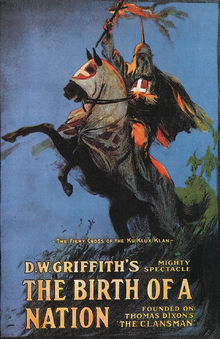 D.W. Griffiths film The Birth of a Nation was an integral point in showing the revival of the Ku Klux Klan and sparking a new sense of hatred towards the African American community. These negative sentiments would escalate into the normalization of black hate at the time. It would be commonplace to hold lynching and public hangings for black men in the southern United States. The documentary also goes into the commencement of segregation law and Jim Crow laws. These laws effectively removed any sense of equality between the races. Forcing African Americans to abide by bylaws that didn’t permit them into establishments such as restaurants, public pools and washrooms that were open to whites, as well as famously the front seats on buses. This leads to an extensive period of time prior to the civil rights movement where the disenfranchisement of the African-American community was the standard in the United States. This is what the reality that 13th is attempting to push against the rhetoric in the aftermath of slavery. Making the case for the 13th amendment not being the ending of the racial divide in American society and not effectively ending the mass-amounts of segregation and disenfranchisement that would be felt for the coming decades.
The civil rights movement was a major turning point in race relations in America. Disbanding segregation laws and giving African-Americans wide-spread voting rights. However, it did not mean the end of the fight for true equality. DuVernay spends a considerable amount of the film’s runtime making a case for the way that law enforcement and government were treating primarily low-income areas of cities poorly. Former American President Richard M. Nixon ran his campaign for re-election on being tough on crime and being harshly antagonist towards the hippie movement of the late 1960s. Making a strong stance on drug laws and enforcing heavy repercussions on those found convicted. On the surface, he is making blanket statements that will make the populous swing towards the Republican party in the coming election. The rhetoric to this situation is that Nixon is promising a major reform on criminal justice that benefits everyone and remains unbiased and equal. The negatives arise in the coming twenty-five years with the presidencies of Ronald Reagan and Bill Clinton who add onto the hysteria with equally flawed views of justice. Ronald Reagan was the American president during the uprising of crack cocaine, predominately in the inner-city which would commonly consist of low-income housing. Reagan passed numerous laws forcing judges to grant extensive sentences for first-time offenders of drug offenses. The laws against crack affected the African-American community extensively. The sentences for crack were made to be longer-lasting than those for powdered cocaine. Creating a poor sense of bias towards the issues that were affecting the inner-city African-American community. Similar strategies were taken by Bill Clinton’s presidency. He attempted to bring a new sense of law and order toward the Democratic party by installing the practice of both; three strike criminal systems and keeping the practice of mandatory minimums. These laws had the ability to put people away for life for doing minor level offenses. Non-violent drug offenses had the potential to land people in jail for 25 to life with these laws in place. Since then, Clinton has spoken out against this type of law and order but there still remains the lasting effect of people put in jail for these minor offenses. This is the reality of the judicial system in the United States. They make an effort to obtain votes by promising reform to protect the citizens. But by doing that they alienate communities by forcing inflated jail sentences. 13th provides a statistic of the increase in prison population in the United States. In 1970, there was a total prison population of 357,292. Non-profit website prisonpolicy.org determined that today in 2018 the U.S. prison population is in the realm of almost 2.3 Million prisoners in the United States (Wagner and Sawyer, 2018). Placing it as the most in the world. The “successes” of the United States judicial system are simply rhetoric used to obtain the political gain. Whereas the reality of the system paints it as a racially biased system in constant need of change to bring a more focused nature to its structure.

The main thesis of DuVernay’s film is that the modern prison system we have is the modern interpretation of slavery. Her thesis and my own are quite similar in the way they add to the true reality of the prison and judicial industrial complex. The documentary spends a copious amount its third act taking a look at how prison workers and prisoners are handled and treated in jail. The overarching idea of prison is to rehabilitate criminals in order to prepare them to be released once they finish their sentence. A section of the film is dedicated to the story of Kalief Browder. Who at the age of 16 was arrested and accused of stealing a backpack that included $700 of electronics inside. He was never charged, but despite that, he chose to plead his innocence instead of taking a plea deal. Not being able to post bail, he was sent to Rikers Island and would stay there for three years as an innocent teenager. 13th talks about his time spent in solitary confinement, the numerous beatings he received from other inmates and guards as well as the lack of time he would get away from all of the abuse. It leads to multiple unsuccessful suicide attempts in prison before his release. He spent time after his release taking interviews about the time he spent at Rikers but rarely focusing on the mental aspects of his tenure in one of the world’s most infamous prisons. In June of 2015, he died as a result of hanging. Forever being a martyr for the reality of the criminal justice system that refuses to have the back of people in situations similar to that of Browder. Where the rhetoric is supposed to tell us how the prison system is the institution made for the rehabilitation of criminals, it refuses to give the opportunity to rehabilitate and simply looks to indict and lock people up. Showing the true horrors of a flawed industry.
A thematically similar film made only two years later I am Not your Negro is a thematically similar documentary. Warren Crichlow’s piece on I am Not your Negro and the writings of James Arthur Baldwin is fairly topical. A section of the piece is quite telling. Focusing on the “black experience” being the “story of America” (Crichlow, 2017). He continues to mention the impact that other figures such as MLK and Malcolm X had on race relations in America. Talking about how he “befriended Medgar Evers, JFK, and Robert F. Kennedy” (Crichlow, 2017). This adds to the push that the civil rights movement had in the 1960s. Breaking down barriers set up by the powerful and allowing them to come together to further their fight for truth against the opposition.
The United States have involved themselves in an extensive number of international feuds with the intention of creating a wider spread of global power and security. Most of these feuds come in the form of War. One of the most egregious abuses of their military industrial complex is the war in Vietnam. A war that started over a dispute of government structure due to the influence of the Cold War and Soviet Union style Communism, descended into an intense and brutal war. The war in Vietnam had been considered a turning point for the United States military but unlike the World Wars previous, there was considerable pushback from left-wing activist groups. These groups fought against the treatment of the Vietnam people and the ideology of the war in general. Peter Davis’s 1974 documentary Hearts and Minds investigates the American perception and rhetoric around the war in Vietnam, as well as the harsh reality of what transpired on the battlefield. One of the most telling moments from the film is a scene in which a soldier is making a speech to a group of children at a school, telling them about his experience in Vietnam. A teacher at the religious school for young children introduces the soldier. He starts his speech by normalizing war. Saying how “someday you will serve in a war”. Creating a false rhetoric for the young children. He paints a dark picture regarding living and dying while in battle, forcing the kids to adhere to the American’s false reality regarding the importance of war and battle. He claims those two sentiments are all that is “important” in the nature of war. The soldier goes onto taking questions from the children listening. The first child asks about the soldier’s feelings at the end of the war. The soldier proceeds to tell the group about serving your country. He does not give the children a sense of individuality but instead forcing them to bend to a certain rhetoric that serving your country is the only option for people in the time of war. One of the more twisted moments of the scene is when a child asks about the beauty of Vietnam as a country. Instead of answering the question truly to the likeness of the little girl who asked it, he used the opportunity to demine the citizens of Vietnam. He speaks of how the people of Vietnam are “backward” and “primitive”. He creates a blanket statement for how the people of Vietnam are perceived by the United States, instead of taking into account their economic stability, predominantly the culture of farming and the fact of them being invaded. All factors that fall into this rhetoric of “primitive culture”. Creating a false reality for these children. In reality, the country of Vietnam is a more “primitive” country compared to the global superpower of the United States. But that doesn’t support a narrative of noble savages that the soldier is attempting to convey to these kids. This scene is a prime example of the rhetoric of the War. Painting a false reality to convey a different sense of nationalistic pride then what the true reality is. The reality comes in the next scene. We are shown footage from a hearing with a former soldier named Edward Sowders. Sowders goes into the transgressions that himself and other soldiers part-took in. He talks about the racially insensitive nature of the military and the slurs they would use to demean the Vietnamese people. He talks about how they would see even the citizens who don’t fight with the military as “inferior” simply due to their race. Truly de-humanizing these people. He goes on to talk about they would treat every man, woman, and child as sympathizers to the Viet-Cong forces. That would lead to them burning houses, huts, and farms of innocent farmers and workers, which we would see in the film extensively. He continues to talk about the rhetoric-reality gap more intimately from the point of view as someone who is a pawn in the overarching story of the Vietnam war. He mentions the way that the military-infused hatred for the people of Vietnam. How himself and his collogues were taught to treat everyone as a threat and a threat to western democracy. This itself speaks on the rhetoric that the military industrial complex uses to alienate outside arguments for war and invasion. This hearing an interview is a major part in deconstructing the rhetoric and truly showing the harsh reality of the war and how the soldiers had been effectively brainwashed with a false sense of patriotism when working to pursue this idealistic feeling of “freedom”.

A few quotes that give Hearts and Minds a deeper sense of documentary filmmaking on a wider scale come from Ib Blondebjerg’s work by talking about multicultural cinema. He speaks on white directors focusing on multicultural filmmaking. He mentions “British directors focusing on the multicultural issue, sometimes very close to a political, documentary reality” (Blondebjerg, 2014). This brings to mind the documentary by Peter Davis. As a westerner coming into a new culture to analyze such harsh environments would have been a definite culture shock. Blodebjerg also goes on to mention that “these areas of the world are often not reported on” (Blondebjerg, 2014). Creating more need for this type of journalism. Hearts and Minds is a prime example of this journalism working to benefit the reality of the worlds issues and not bending to the false rhetoric of the United States.
The institution of religion is a staple of American society. They maintain a constant need to preach in all of the facets of their culture. From having “In God we Trust” on currency to having The Pledge of Allegiance spoken at schools. Religion also consistently finds its way into politics. With the question “should god play a role in politics?” appear frequently. These are all integral to the culture the United States have created over the past centuries. However, despite the idea that religion is an accepting, nurturing and open environment that invites debate and discussion over issues. But according to the controversial, independent 2006 documentary Jesus Camp, not all groups that practice Christianity stand by a practice of acceptance in belief. The group of right-wing evangelical Christians that the documentary follows use hate to incite a religious following in the children they preach too instead of creating a nurturing environment for them to be raised in, therefore allowing a sense of individuality and spiritual independence.
https://friendlyatheist.patheos.com/2016/08/01/this-is-worse-than-the-worst-scene-from-jesus-camp/
The film spends quite a bit of time looking at the way preachers convey their rhetoric to the groups of children that attend both sermons and the titular “Jesus Camp”. Many of the messages involved straying away from any sense of nurturing. The main preacher that we follow is Becky Fischer. She consistently makes incredibly animated speeches that due to the energy and wording are able to get kids involved but still have the ability to incite a dark aura around the room. A few of the subjects that she and other preachers in the film are attempting to convey to the children include that of media, abortion, and global warming. When talking about media, they hinge on referring to media that is “unholy” and could be seen as a device that could drive children away from their rhetoric. Film franchises such as Harry Potter have negative connotations in the eyes of the evangelical right. They make a point to disband the children’s personal ideas and faith and attempt to effectively brainwash them into a false sense of togetherness and spirituality. Bringing up abortion is a common thread in the eyes of the preachers in the film. They create sermons specifically for the kids to force them into their ideology at such a young age for such a complex issue. All of these topics of discussion are off the table as a child attempting to convey a dissenting opinion. This goes against the togetherness and positive ideas that could be passed to these children. An incredibly telling scene is one where the documentarians are interviewing popular mega-church preacher Ted Haggard about preaching to children. Haggard says that “You have to enfaces people younger than you, in order to have your church grow in a healthy way”. This quote speaks volumes to how the evangelical left are running their churches. They make a point to host the kids at camps and indoctrinate them into activities structured to shift their belief and shame those who do not follow the same path. This is how the evangelical right is attempting to convert a whole generation of young American youth into the political landscape of far-right republicanism. By showing them with rhetoric with negative connotations that do not take into account for their own individuality and simply looking to further their own political agenda. This is where the reality of western religion is shown. Despite a culture that holds religion to such a high standard and prides itself on how devout they are as a nation by electing political candidates that push the same values. The way that the documentarians film everything is specifically interesting. It brings back the ideas that were brought up by Bill Nichols in his book Introduction to Documentary. He talks about the “Observational Mode” (Nichols, 2017) which on the surface just sounds as if it couldn’t be as compelling as a standard documentary done by someone like Michael Moore, who’s made his brand on using voiceover and integration of himself in his documentaries. The work on Jesus Camp is made possible by not having the documentarians use the platform to speak and simply shows the audience what happens, instead of shifting opinions by themselves injecting their thoughts constantly. It’s a way that benefits the documentary by allowing the viewer to take in the reality of the film effectively and not bending to tactics similar to that of Michael Moore in order to allow the audience to understand that reality over the rhetoric.
 In conclusion. The messages we as a society are given can be construed in many different ways. The important thing about it is that we maintain a sense of individuality throughout and can give ourselves the chance to be independent thinkers who won’t be shifted by those who attempt to convey a different ideology that has poor intentions. In the case of 13th. A prison system in constant need of reform due to the harsh system of biases. In Hearts and Minds. A military hell-bent on achieving patriotic freedom by means of invasion and destruction. Finally, Jesus Camp, where instead of teaching children about the quality of the world and positivity, simply demeans society for the way it makes us different. All for political gain. The way the United States has been perceived over the years as this global superpower has shifted since the 2016 election of Donald Trump. While some problems rest with its voters, the system is the one that gave us a false sense of security. The system should be held accountable for certain rhetoric that is used in order to bend thoughts and ideas to opposite political venues.
Work Cited
Bennett, Bruce. Becoming Refugees: Exodus and Contemporary Mediations of the Refugee
Crisis.Transnational Cinemas, Vol. 9, No. 1 (2018). 13-20.
Bondenjerg, Ib. Engaging with Reality: Documentary & Globalization. Chicago: intellect Bristol
- 2014. 209-210
Crichlow, Warren. Baldwin’s Rendezvous with the Twenty-First Century: I am Not Your Negro.
Film Quart, Vol. 70, No. 4 (Summer 2017). 10-15.
Misiak, Anna. Not a Stupid White Man: The Democratic Context of Michael Moore’s
Documentaries.Journal of Popular Film and Television, Vol 33, 2005. 160-168.
Nichols, Bill. Introduction to Documentary. Indiana University Press, 2017. 132-134.
Sobchack, Vivian. Inscribing Ethical Space: Ten Propositions On Death, Representation, and Documentary. Quarterly Review of Film Studies. Vol. 9, No. 4. Fall 1984. 283-286.
Wagner, Peter. Swayer, Wendy. Mass Incarceration: The Whole Pie 2018. 14thMarch, 2018.
Retrieved 2rdDecember 2018 from https://www.prisonpolicy.org/reports/pie2018.html
Images received from:
Wikipedia
https://friendlyatheist.patheos.com/2016/08/01/this-is-worse-than-the-worst-scene-from-jesus-camp/

 The FilmSpot